Functional scope
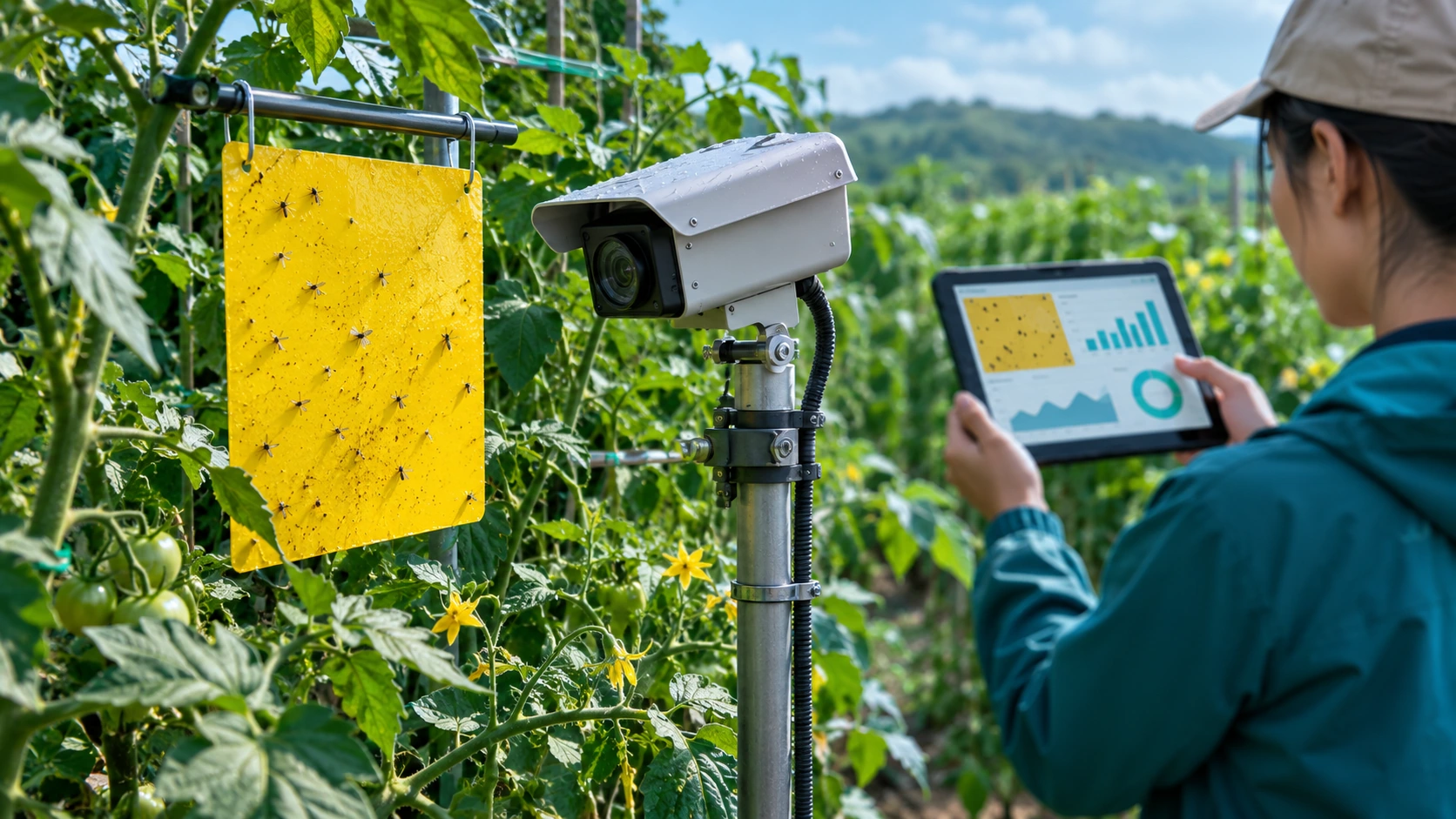
Cameras or traps record images at defined locations, times and lighting conditions. Systems can manage image collections, mark quality, record counts and support classification with evaluated AI models; identification is not an absolute diagnosis.
Design and integration
Define monitoring sites, capture angles, clarity, power, recording intervals, environmental conditions and connectivity. Gateways or edge processing can transmit images or analysis; records include sources, timestamps, model version, verification results and access rights.
Practical applications
Maps, time-series charts and specialist-defined thresholds help detect trends and prioritize field inspections. Qualified users confirm observations, update logs and choose appropriate responses; the system does not replace agricultural experts.
Solution capabilities and in-depth scope
Intelligent analysis: Use AI to analyze insect data, supporting identification and early notification of pest occurrence at different monitoring scales.
Comprehensive monitoring: Access data from connected devices via a mobile application from different locations and times.
Statistics and forecasting: Classify and count insects, visualize population density and support trend forecasting to help growers protect crops proactively.
The solution integrates cameras and AI to capture insect images, analyze them, report insect types and density, and support appropriate intervention recommendations.
Applications include agriculture, urban management, environmental protection and scientific research, supporting insect monitoring and management.
Cost and time optimization: Reduce time and costs associated with pest control through automated monitoring.
Crop protection: Help limit insect-related damage and improve agricultural yield and quality.
Risk management: Support early detection of pest groups, allowing growers to plan responses and help reduce crop loss risks.
DGK supports planning, deployment, training and post-deployment support to meet client requirements.
Testing and transfer
Review image quality under field conditions, verify reference samples and recognition for defined groups, and test connectivity, timestamps, faulty-image handling, reporting and usage rights. Deliver configurations, assessment criteria, model limitations and operational guidance.
References
DGK archive article 106 introduced cameras, AI and edge computing for monitoring, recognition, density statistics and alerts. Expanded design and accuracy must be verified using suitable data; no recognition rates or yield gains are claimed.